
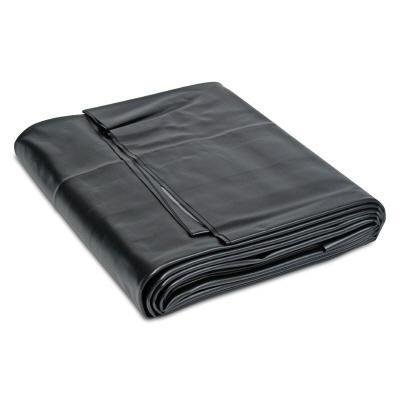
A lined pond keeps water where you need it. Getting three things right — thickness, size and site preparation — decides whether the liner lasts.
1. Choose the thickness
| Thickness | Typical use |
|---|---|
| 400–500 micron | Small and medium farm ponds on smooth soil |
| 750 micron | Larger ponds, fish ponds, some stones in the bed |
| 1,000–1,500 micron | Large reservoirs, rocky beds, civil and effluent work |
2. Calculate the size
Liner length = top length + 2 × depth + 2 m (1 m anchoring each side). Liner width = top width + 2 × depth + 2 m. Example: a 30 m × 20 m pond, 3 m deep, needs a liner of about 38 m × 28 m.
3. Prepare the site
- Remove stones, roots and sharp objects; smooth the bed and walls.
- Compact the soil; add a sand or geotextile layer on rough ground.
- Dig an anchor trench around the top edge.
- Lay the liner on a calm day and avoid walking on it with shoes that could puncture it.
Jointing
Large liners are jointed on site by heat sealing. Our technicians can do this for you — see pond lining sheets.
Quick answers
Short answers to common questions. Ask us anything that is not covered here.
Which pond liner thickness is best for a farm pond?
500 micron suits most small and medium farm ponds on smooth soil; go thicker for large or rocky ponds.
How do I calculate pond liner size?
Top length + 2 × depth + 2 m, and top width + 2 × depth + 2 m.
Do you install pond liners?
Yes, our technicians lay and heat-seal joints on site.
Tell us what you need to cover.
Share the size, quantity and where it will be used. We reply with a material suggestion and a quotation.